About the Department
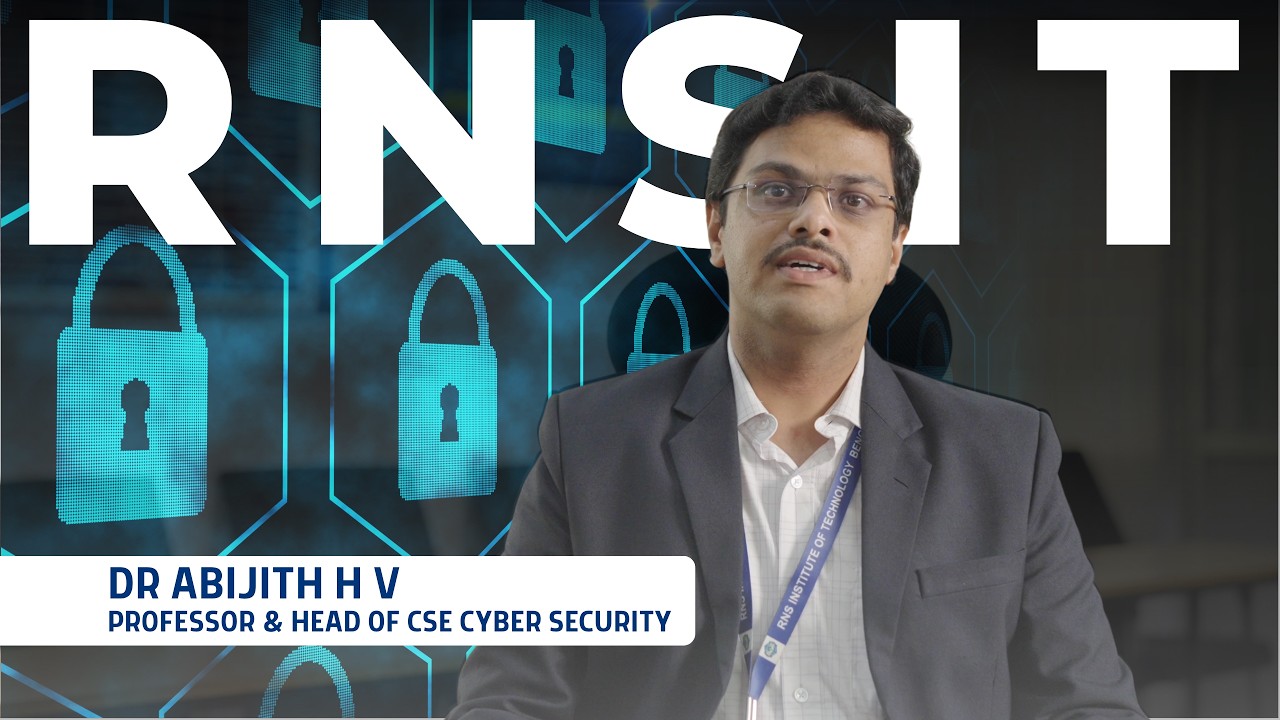
The Department of CSE – Cyber Security was started with the notion of establishing a complete cyber security ecosystem. In an era of exponential digital expansion, the corporate landscape has transitioned into a digitally driven operational framework. This metamorphosis has ushered in a parallel surge in cyber threats, compelling organizations to fortify their cybersecurity posture. As the demand for cybersecurity expertise reaches new heights, our program, in collaboration with industry luminaries, offers a specialized curriculum. It equips students with cutting-edge skills, spanning cryptography, API security, software fortification, network defense, identity and access management, cloud security, hardware safeguards, malware forensics, ransomware mitigation, vulnerability assessments, penetration testing, and more. This program empowers graduates to become agile defenders against the relentless evolution of cyber threats, ensuring the security of invaluable organizational assets in the contemporary industrial landscape.
Vision
To be a global leader in imparting Cyber Security education, research & development and empowering young minds to safeguard the digital world
Mission
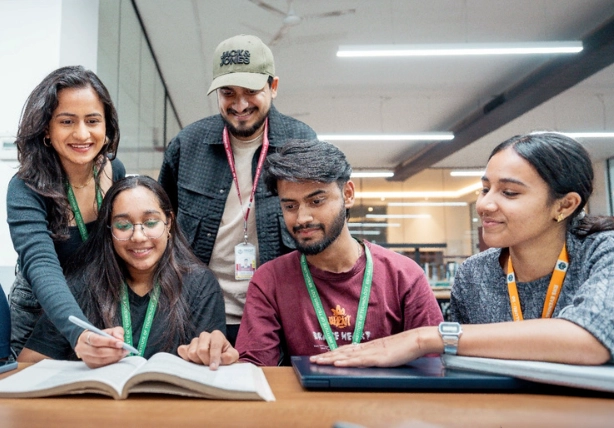
- Empower students with Cyber Security essentials through hands-on facilities and a strong ethical foundation.
- Facilitate collaborative learning environment, teamwork, and global certifications for real-time challenges.
- Drive innovation in Cyber Security through state-of-the-art research, fostering a culture of exploration through higher learning and entrepreneurship.
- Promote students to possess qualities of interpersonal, interdisciplinary, leadership, and societal responsibilities.
The CSE – Cyber Security graduates will have
- PSO1: Proficiency in applying principles of software development to deliver efficient software solutions.
- PSO2: Competency in securing information, systems, and networks through the implementation of cybersecurity best practices.
- Engineering knowledge: Apply the knowledge of mathematics, science, engineering fundamentals, and an engineering specialization to the solution of complex engineering problems.
- Problem analysis: Identify, formulate, research literature, and analyze complex engineering problems reaching substantiated conclusions using first principles of mathematics, natural sciences, and engineering sciences.
- Design/development of solutions: Design solutions for complex engineering problems and design system components or processes that meet the specified needs with appropriate consideration for the public health and safety, and the cultural, societal, and environmental considerations.
- Conduct investigations of complex problems: Use research-based knowledge and research methods including design of experiments, analysis and interpretation of data, and synthesis of the information to provide valid conclusions.
- Modern tool usage: Create, select, and apply appropriate techniques, resources, and modern engineering and IT tools including prediction and modeling to complex engineering activities with an understanding of the limitations.
- The engineer and society: Apply reasoning informed by the contextual knowledge to assess societal, health, safety, legal and cultural issues and the consequent responsibilities relevant to the professional engineering practice.
- Environment and sustainability: Understand the impact of the professional engineering solutions in societal and environmental contexts, and demonstrate the knowledge of, and need for sustainable development.
- Ethics: Apply ethical principles and commit to professional ethics and responsibilities and norms of the engineering practice.
- Individual and team-work: Function effectively as an individual, and as a member or leader in diverse teams, and in multidisciplinary settings.
- Communication: Communicate effectively on complex engineering activities with the engineering community and with society at large, such as, being able to comprehend and write effective reports and design documentation, make effective presentations, and give and receive clear instructions.
- Project management and finance: Demonstrate knowledge and understanding of the engineering and management principles and apply these to one’s own work, as a member and leader in a team, to manage projects and in multidisciplinary environments.
- Life-long learning: Recognize the need for and have the preparation and ability to engage in independent and life-long learning in the broadest context of technological change.
A Graduate of Computer Science and Engineering (Cyber Security) will be able to:
- PEO1: Demonstrate technical skills and problem-solving capabilities in the field of cyber security, effectively addressing complex challenges.
- PEO2: Develop strong communication skills, collaborative spirit to convey technical concepts and findings effectively to stakeholders, to foster employability in cyber security and related fields.
- PEO3: Incorporate ethical, legal, and social aspects into their professional practice, recognizing the implications of their actions on individuals, organizations, and society.
- PEO4: Actively engage in activities that foster the continuous development of their computing and cyber security skills, staying abreast of emerging technologies, best practices, and evolving threats to maintain their effectiveness as professionals in the field.
HOD's Message
Latest Events
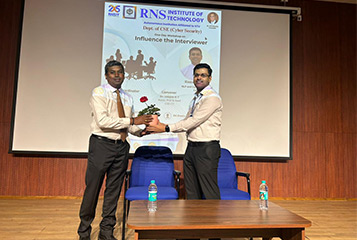
Influence the Interviewer
The Department of Computer Science and Engineering (Cyber Security) at RNS Institute of Technology organized a one-day workshop titled “Influence the Interviewer.” The session was designed to equip students with essential skills required to excel in interviews and professional interactions.
Mini Capture The Flag (CTF)
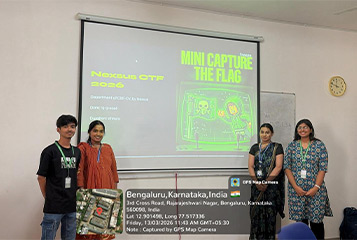
The Department of Computer Science and Engineering (Cyber Security) at RNS Institute of Technology organized a technical event called "Mini Capture The Flag" for 4th-semester students. Held in CY Lab 306 from 11:30 AM to 1:15 PM, the event was hosted by the NEX-SUS Club and the IEEE Computer Society to challenge students' cybersecurity skills.
Revival of Indian Knowledge System: A Boost to Holistic Education
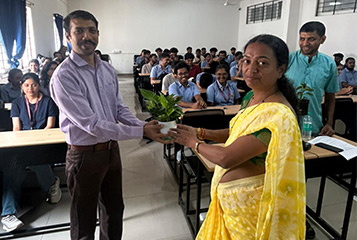
The Department of Computer Science and Engineering (Cyber Security) at RNS Institute of Technology organized an insightful session titled “Revival of Indian Knowledge System: A Boost to Holistic Education.” The session aimed to create awareness among students about the significance of traditional Indian knowledge systems and their relevance in modern education.
Capture The Flag
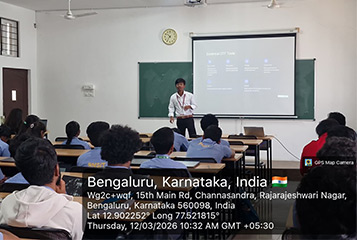
Capture The Flag (CTF) is a cybersecurity competition in which participants solve challenges based on key security domains such as cryptography, web exploitation, reverse engineering, digital forensics, and binary exploitation. Each challenge involves uncovering a hidden “flag” by applying technical knowledge, logical reasoning, and problem-solving skills.
The AI Blueprint
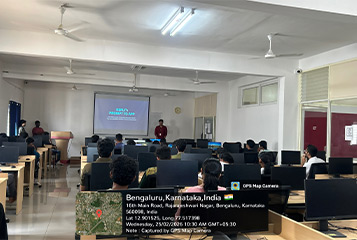
The “AI Blueprint” workshop was conducted with the aim of enhancing students’ understanding of modern AI platforms and their real-world applications. As artificial intelligence continues to transform the way students learn, conduct research, and develop projects, the session emphasized the importance of adopting a more informed, intentional, and responsible approach to using AI tools.
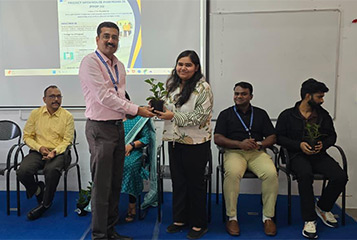
Project Open House Panorama 25 (PROP 25)
The Department of Computer Science and Engineering (Cyber Security) at RNS Institute of Technology organized "Project Open House Panorama 25" for 5th and 7th-semester students. Held in the Seminar Hall of the CSE-CY Block, this event provided a platform for students to showcase their technical projects and innovations to peers and faculty.
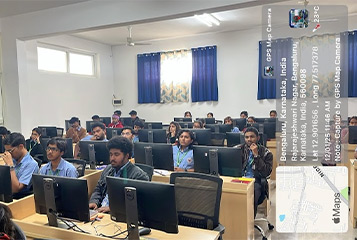
Workshop on Digital Forensics – Beyond the Proof
The Department of Computer Science and Engineering (Cyber Security) at RNS Institute of Technology organized a workshop titled “Digital Forensics – Beyond the Proof”. The session aimed to provide students with insights into the critical role of digital forensics in modern cybersecurity.
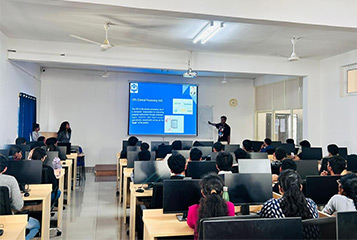
The Backbone of Computing
The Department of Computer Science and Engineering (Cyber Security) organized a hands-on technical workshop titled “The Backbone of Computing”, aimed at providing students with a strong foundation in the fundamental building blocks of computers. The session introduced participants to core concepts of computer hardware, internal components, and system architecture.
Achievements of The Department
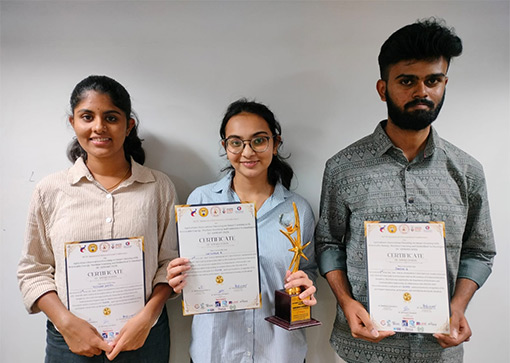
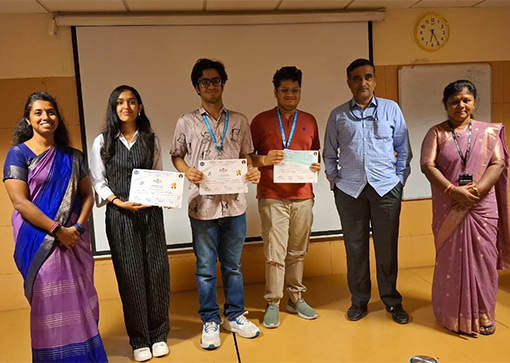
Chethana R, Rithika Shetty, and Sanjay N
Represented the institution at a state-level Ideathon, presenting an innovative Smart Waste Management solution. The team secured Second Place and won a cash prize of ₹10,000, showcasing their creativity and problem-solving skills.
Aryan and Sankalp
Participated in Parichay 2025 conducted by RNSIT and secured 1st place in the Debate Competition.
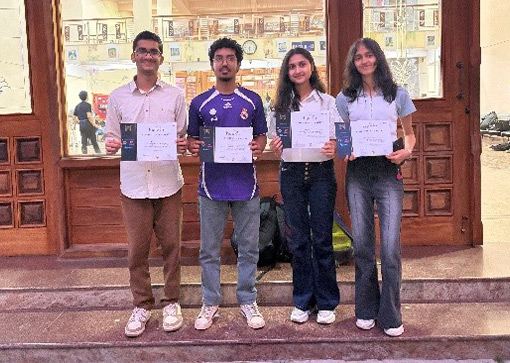
Abhinav, Ankitha, Achyut
First year CY-A students, secured 3rd place in Case Craft in Magnovite, which was organized by Christ University, Kengeri.

Aaravya Jaiswal
Aaravya Jaiswal represented the college in the inter-college Table Tennis competition at BMSCE on 24th November, reaching the Quarter Finals as one of the top 8 participants. He also played Table Tennis in Agones 2025 at RNS Institute of Technology on 23rd November, securing 1st place.
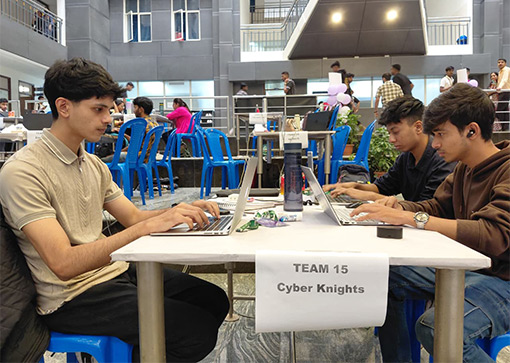
Pavankumar G Aralikatti
Took part in the IoTopia 24-hour National Level Hackathon at Reva University and competed against top 50 teams nationwide.
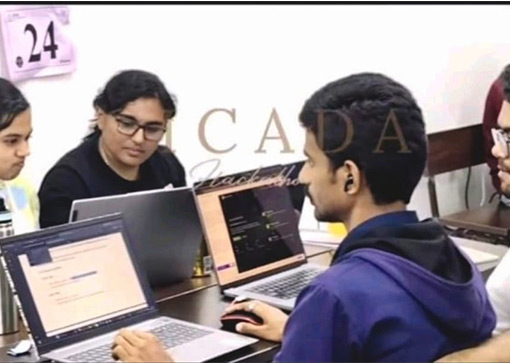
Samartha D N and Tanmayee Suresh
Engaged in a 24-hour Hackathon at the Cicada Inter-Collegiate Tech Fest hosted by Atria Institute of Technology.
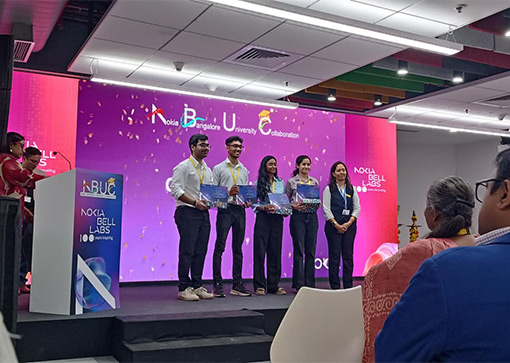
Nithyashree R, Dev Kukreja, Mukund V, and Siri Hegde
The 3rd-year Cyber Security students were selected for the Nokia–Bangalore University Collaboration and won the “Best Implemented Industry Project” award for “Enhancing Product Security using GenAI.” The team also received a ₹22,000 seed grant from the college for their project “Smart Campus Simulation,” which involves creating an automated campus environment and performing penetration testing in a controlled sandbox setup.
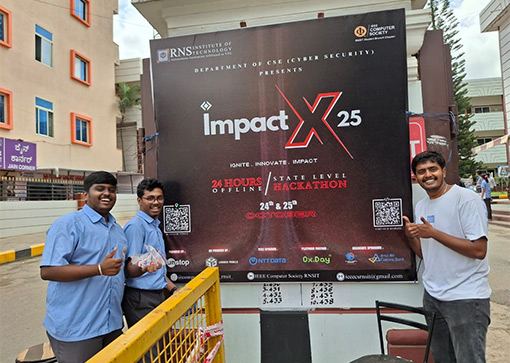
impactX 25
The IEEE Computer Society team, consisting of core members Nithyashree R, Dev Kukreja, Rithika Shetty, Chetana R, Anirudh G M, Mukund V, and Siri Hegde, along with volunteers including Sanjay N, Darshan N, Raman V P, Arpit Kumar, Mohit U K, Shreyas S, and Aryan Revankar. The IEEE Computer Society team successfully hosted the 24-hour hackathon “ImpactX’25” at the RNSIT campus. The event witnessed tremendous participation and was a major success, highlighting excellent coordination, planning, and execution by the entire team.
Placement Statistics










Gallery
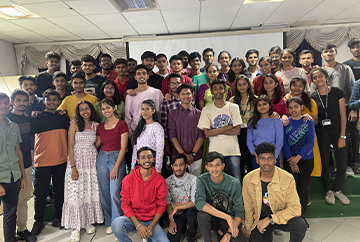
Lush Green Campus with Top Placement Opportunities
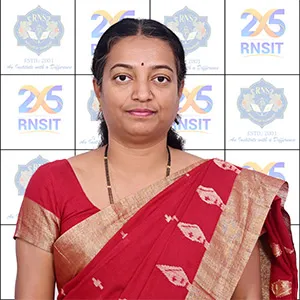
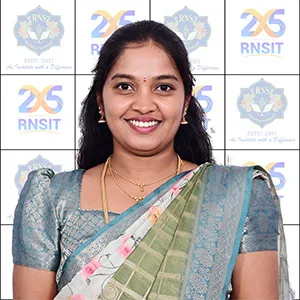
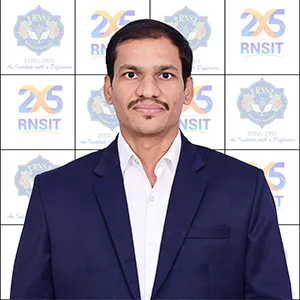
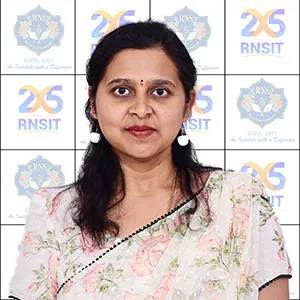
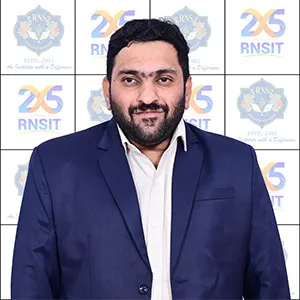
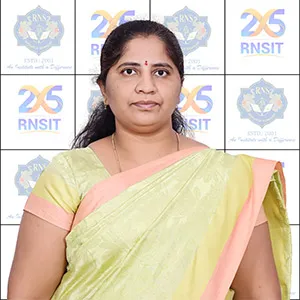
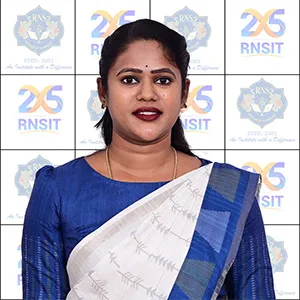
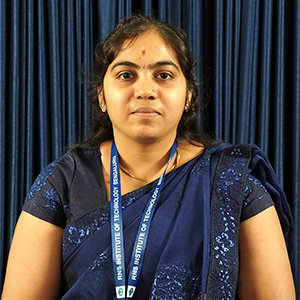
Teaching Staff
Student Testimonials

Sukhampreet Kaur
2023-2027
I am truly grateful to be a part of the Department of Cybersecurity, as my experience here has been both enriching and inspiring. The faculty members are highly knowledgeable, supportive, and always encourage students to think beyond the classroom, helping us build a strong foundation in both theory and practical skills. The department offers numerous opportunities through workshops, projects, and hands-on learning, which have boosted my confidence and prepared me for real-world challenges. The learning environment is dynamic and motivates students to explore their interests and innovate. What makes this college truly special is its focus on overall development, encouraging students to participate in extracurricular activities, collaborate with peers, and build meaningful connections, making me proud to be a part of this institution.

Chaitanya M
2023-2027My journey in Cybersecurity Engineering at RNSIT has been a transformative experience that has shaped both my technical and analytical abilities. The blend of academic knowledge and practical exposure has enabled me to understand real-world security challenges and develop effective solutions. With constant support from faculty and access to learning opportunities, I have strengthened my skills in identifying vulnerabilities, analyzing threats, and building secure systems. I am driven by curiosity and a strong passion for cybersecurity, and I aim to keep evolving with this dynamic field.

Bhargavi Gangoor
2023-2027What sets our Cyber Security department apart is the emphasis on practical application. In my three years here, I’ve had the opportunity to dive deep into network security, ethical hacking, and digital forensics. The department provides the environment and the tools necessary to bridge the gap between classroom learning and actual technical proficiency
Get In Touch
-
 principal@rnsit.ac.in
-
 080 28611880/
1/
2,+91 90359 60355
080 28611880/
1/
2,+91 90359 60355
-
 RNS Institute of Technology,
Dr. Vishnuvardhan Road
R R Nagar Post
Channasandra
Bengaluru -560 098


Send A Message